
Many Idaho homeowners know the threat of water damage all too well. From spring snowmelt seeping into basements to a frozen pipe bursting overnight, water emergencies create stressful, sometimes dangerous environments that require immediate attention.
Fast action from a trusted, local restoration team can make all the difference. Valley Restoration provides 24/7 water damage restoration in Twin Falls, Wood River Valley, and surrounding Idaho service areas. We prioritize rapid response to mitigate water damage and fully restore your property.
Let’s dive into the causes and dangers of water damage, as well as the benefits of working with a professional restoration company.
Common Causes of Water Damage in Idaho Homes
A combination of seasonal extremes and aging infrastructure creates conditions that put Idaho properties at elevated risk for water damage. Here are the most common causes.
Appliance & Plumbing Failures
Water heaters, dishwashers, and washing machines can all produce slow leaks that go unnoticed until the damage is significant. Appliance and plumbing inspections can help you catch leaks early before problems escalate.
Rural properties on well water and septic systems may face additional problems. Sewage backup qualifies as Category 3 water damage, the most dangerous category that requires specialized biohazard remediation.
Snowmelt and Spring Runoff
South-central Idaho often experiences rapid snowmelt between March and May, saturating the ground and pushing water toward foundations and crawl spaces. Some winters are more devastating than others; the winter of 2017, nicknamed “Snowmageddon,” delivered historic snowfall and subsequent flooding, as described by the Idaho Office of Emergency Management.
Older homes with insufficient foundation waterproofing have experienced structural damage due to significant snowpack events.
By contrast, in April 2026, Idaho set a new record low for snow water equivalent (SWE), with extremely dry conditions rapidly melting the low snowpack, according to the National Integrated Drought Information System. Though winter weather varies from year to year, preparing for heavy snow and subsequent spring runoff helps you stay ahead of any potential water damage.
Frozen and Burst Pipes
Idaho’s freezing winters make pipe freezing one of the state’s top insurance claims. Pipes in crawl spaces and garage supply lines are especially vulnerable to freeze-thaw cycles. And the higher your home’s elevation, the greater the risk of bursting pipes.
Irrigation System Failures
The state of Idaho is known for its agricultural production, so many properties in both rural and suburban areas have irrigation systems. Common causes of damage include failed fittings and cracked lines. Likewise, improperly performed late-season shutdowns may leave standing water in lines that can freeze, expand, and fail the following spring.
Flash Flooding
Summer thunderstorm runoff is another issue Idaho homeowners face. Short, intense storms can overwhelm drainage systems, sending water toward low-lying areas and basement entries faster than the ground can absorb it.
The 72-Hour Window: Why Speed Determines the Outcome of Water Damage Restoration
When it comes to water damage, every hour of delay shortens the list of what can be saved and broadens the scope of what must be replaced. Addressing the water emergency as soon as possible prevents further water migration and permanent material damage.
Here’s a breakdown of the 72-hour water damage window:
- Hour 0-2: During the first couple of hours of a water emergency, water spreads and absorbs into drywall and other porous surfaces.
- Hour 2-24: As the day goes on, saturation will deepen into subfloors and wall cavities. Affected electronics and furniture are at risk of permanent damage. Odors may also develop during this timeframe.
- Hour 24-48: Once a full day has passed, mold spores will begin to colonize in humid, dark spaces.
- Hour 48-72: Structural materials like drywall and trim may start to swell, warp, and split. Mold development may become visible and odorous. Remediation costs tend to escalate the longer water damage sits.
The First 24 Hours: Your Priority Action List
Every minute of inaction allows water to seep deeper into your floors, walls, and insulation. Take the following steps in order to mitigate immediate damage.
1. Ensure the Space Is Safe to Enter
First, assess whether the affected area is safe to enter or reenter. Category 1 water damage is generally safe to handle, while Category 2 is somewhat contaminated and requires gloves if you come into contact with it.
Homeowners should avoid Category 3 water damage altogether. These situations require biohazard cleanup services, in which trained professionals with the proper protective equipment and specialized tools arrive to disinfect and clean the space.
Whether you enter the water-damaged zone or exit the home, watch for slippery surfaces and structural hazards, such as sagging ceilings or compromised floors.
2. Shut Off the Source
If you’re dealing with an internal source of water damage, locate and close the main water shutoff valve or the supply line of the affected fixture. If you’re experiencing flooding, do what you can to minimize the damage or wait for help to arrive.
Only take these actions if you are safely able to do so. If water reaches or comes into contact with your electrical panels or outlets, shut off the power or, if it is unsafe to do so, evacuate immediately.
3. Document Everything
For insurance and reporting purposes, photograph and take videos of every affected room. Make sure to capture any visible waterlines, damaged belongings, and structural damage; this will help an insurance adjuster piece the situation together. Add any useful supplemental information, such as the time and source of the emergency.
Do not move or discard any damaged items until your insurance adjuster has documented them. It’s important to leave the site untouched to ensure the accuracy of the insurance claim.
4. Call a Certified Water Damage Restoration Company
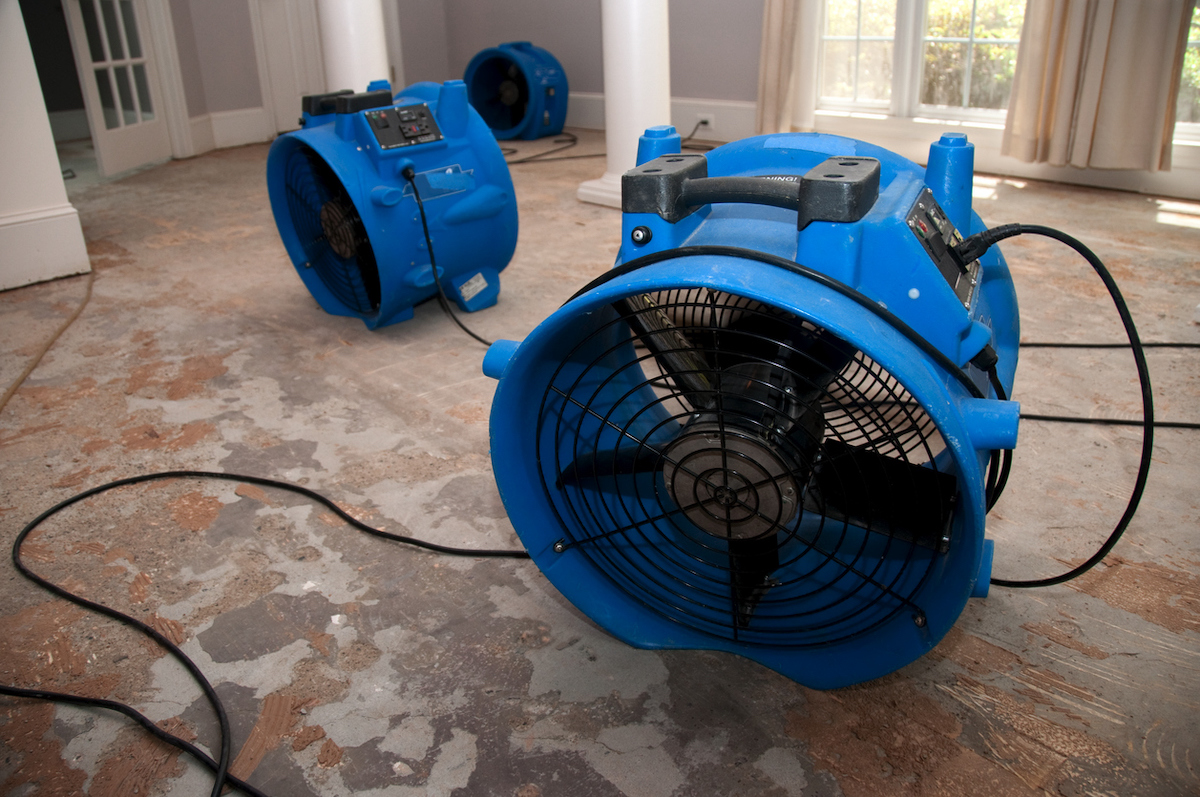
Water damage mitigation must begin within 24-48 hours to prevent mold growth, as stated in the EPA’s guide to mold and moisture. A team of restoration specialists will come to your property as quickly as possible to begin the professional mitigation process. Depending on the water damage situation, they may use moisture removal, industrial extractors, and drying equipment to eliminate moisture and restore your property.
5. Call Your Insurance Company
Reporting the event as soon as possible allows you to get the insurance claim process moving. At this time, you may want to ask your agent about coverage and your deductible. Log the details of that conversation, including the time and date, representative name, and what was discussed.
What Restoration Professionals Do That Homeowners Can’t
While some homeowners attempt to clean up water damage themselves, professional restoration services are typically needed to fully dry, sanitize, and restore the area. Water damage restoration professionals have the specialized training, expert tools and equipment, and requisite years of experience to address hidden moisture and prevent mold development.
Here are some of the things a local restoration team can handle that DIY jobs typically miss or get wrong:
Moisture Mapping
Restoration specialists use thermal imaging and moisture meters to identify water migration that’s otherwise invisible. Hidden water damage can appear behind walls, under tile, inside cabinetry, or in other places you may not think to check or that are difficult to access.
Industrial Extraction and Drying
If you’ve ever tried to pat-dry spilled water on carpeting, you probably know this approach doesn’t get the job done – especially in large-scale damage, such as basement flooding or a major appliance leak.
In these situations, restoration specialists will use truck-mounted extractors, which can remove hundreds of gallons of water, and commercial dehumidifiers. Professional drying using this equipment is the best way to prevent a mold problem down the road.
Controlled Demolition
When it comes to water-damaged materials, homeowners can have trouble determining what’s salvageable and what needs to be removed and replaced. A water damage specialist provides professional assurance by determining which materials are repairable and which require reconstruction. This certainty helps prevent over-demolition.
Mold Prevention
In addition to mold remediation, restoration companies can prevent mold development, protecting your home’s surfaces and air quality. Specialists may apply antimicrobial treatment during the drying phase of water damage restoration.
For Water Damage Restoration in Idaho, Choose Valley Restoration
When faced with water damage in your Idaho home, keep in mind that the outcome is determined almost entirely by how fast you act. Since 1968, Valley Restoration has served families and business owners throughout the Wood River Valley and Magic Valley, restoring safety and structure to properties after disasters.
Our company is IICRC-certified, meaning we hold the highest credential in the property restoration and cleaning industries. With expert knowledge and industry-standard tools, our technicians address water damage effectively the first time, regardless of size or severity.
For professional water damage restoration in Ketchum, Sun Valley, Twin Falls, and any of our Idaho service areas, call Valley Restoration at 1-208-875-5871 or contact us online today.
FAQs
How much does water damage restoration cost in Idaho?
Water damage restoration costs $2,000 to $6,000 on average, according to HomeGuide, but the range is wide for good reason. A contained Class 1 leak, caught early, can cost as little as $150 to $500, while a Class 4 event – prolonged flooding, hurricane-level water intrusion, or damage spanning multiple rooms and structural systems – can reach $100,000 or more. The single biggest cost driver is time: the longer water sits untreated, the more materials need to be replaced rather than dried and saved. Valley Restoration provides free onsite estimates. We’ll assess the damage and walk you through what to expect before any work begins. Plus, we offer financing with GreenSky for qualifying projects.
Will my homeowner’s insurance cover water damage in Idaho?
Whether your policy covers water damage depends on the source and how quickly it developed. Standard homeowners insurance generally covers sudden, accidental events – burst pipes, appliance failures, and similar internal incidents – but typically excludes gradual leaks, neglected maintenance, and flood-related intrusion. Storm runoff and flash flooding require a separate flood insurance policy through the National Flood Insurance Program (NFIP) or a private carrier. If you’re unsure whether your damage is covered, document everything before any cleanup begins and call Valley Restoration. We work directly with insurance companies and can help you understand your options before you file a claim.
What should I do first when I discover water damage?
Shut off the main water supply only if it’s safe to do so. Then, call a professional restoration company immediately. Do not use a standard household fan or vacuum; improper drying can actually spread moisture and accelerate mold growth.
How long does water damage restoration take?
A minor leak caught early may be fully restored in a few days, whereas a significant flood or multi-room event can take several weeks or even months if reconstruction is needed. The sooner you start the restoration process, the better; beginning within the first hour yields better outcomes than starting 12 or more hours later.